A T&M tag is the daily record of labor, equipment and materials actually used on extra work. It exists because not every change can be priced up front — sometimes the quantity is only knowable while the work is being done. Where a contract allows time and materials, the tag stops being paperwork and becomes the pricing itself.
The question a T&M record has to answer
One question, and everything on the tag serves it: which resources were actually used to execute this change?
- labor hours
- classification of each worker
- equipment used
- materials consumed
- dates of execution
- location of the work
The more precise the record, the more reliable the figures look when they are reviewed weeks later. Vagueness here does not read as an oversight; it reads as an estimate.
Record it the same day
Reconstructing hours several days after the fact is the most common failure. It raises the risk of genuine inaccuracy, and separately it damages credibility — a reviewer can usually tell the difference between a record made in the field and a number assembled in an office. Log labor, equipment and materials on the day the work happens.
Signatures and confirmations
Many contracts require T&M records to be signed or confirmed by a representative of the general contractor. Where that requirement exists, treat it as part of the operating procedure rather than an afterthought. A signature obtained on the day of execution normally ends any later argument about quantities or hours.
If the signature cannot be obtained, preserve evidence that you attempted to get it in the manner the contract specifies. That attempt, documented at the time, is worth considerably more than an explanation offered later.
Record only what belongs to the change
Keep the resources used on the change order separate from those spent on the original scope. Mixing them makes the analysis harder and invites questions about the whole submission, including the parts that were never in doubt.
Wherever practical, maintain a distinct record per change. It simplifies the eventual proposal and it makes any audit far quicker.
T&M does not remove the need for other documentation
Even where the contract provides for payment on time and materials, the surrounding records still matter — daily reports, photographs, communications, revised drawings, and the record of how the work progressed.
The hours show how much was used. Everything else explains why those resources were necessary. A submission that proves the first without the second tends to be negotiated down rather than approved.
The daily record that supports a T&M tag is covered in daily reports as change order evidence, and the notice obligation that usually comes first in change order notice.
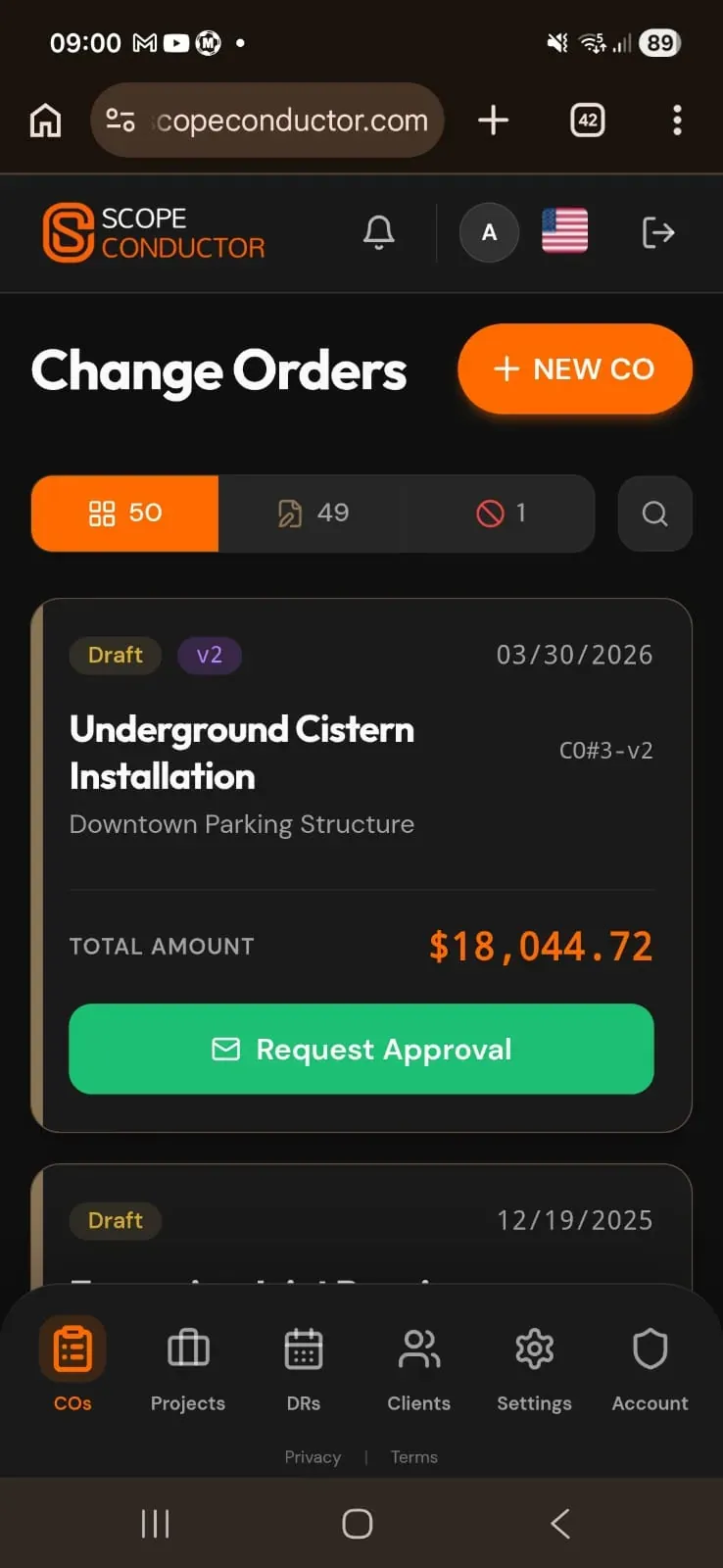
ScopeConductor numbers your change orders automatically, attaches field photos as evidence, sends them for signature and follows up until you get an answer.
See how it works